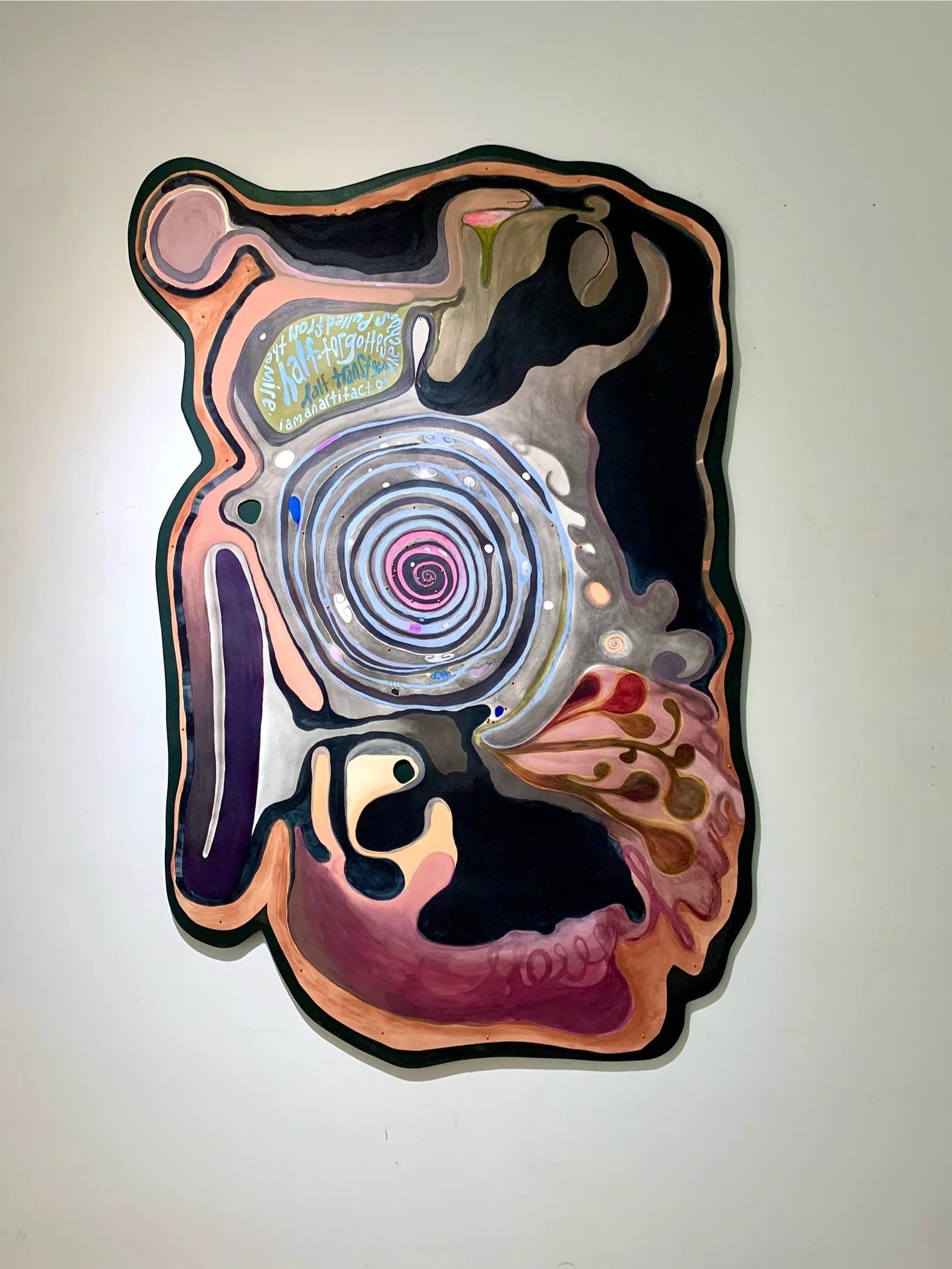
Patricia Davis
Patricia Davis (she/her, b. 1985) is a visual artist, educator, and curator. She earned her MFA in Studio Art from the University of Nebraska–Lincoln and a BFA in Studio Art, with concentrations in printmaking and sculpture, from The University of Alabama in Tuscaloosa. While at UA, she was recognized as a first-generation Ronald E. McNair Scholar and a Windgate Fellow. She also studied at the Santa Reparata International School of Art in Florence, Italy, broadening her artistic practice and cultural perspective.
Davis completed a residency at the Cedar Point Biological Station in Ogallala, Nebraska, where she engaged directly with the natural environment. She has exhibited nationally, most recently with a solo show in Tuscaloosa, AL, titled The Space Between in 2025. She has held leadership roles in gallery and collections management, including Curator and Manager of the UNO Art Gallery and Collections at the University of Nebraska at Omaha, and Director of the Eisentrager-Howard Gallery and Faculty Advisor to the MEDICI Gallery at the University of Nebraska–Lincoln. During this time, she joined AAMG (Association of Academic Museums and Galleries) and PACCIN (Preparation, Art Handling, Collections Care Information Network) and led the development of numerous exhibitions, programs, and sustainable systems that fostered community engagement and supported artists at all stages of their careers.
Since returning to Alabama in 2023, Davis has focused on deepening her studio practice while supporting the growth of visual arts communities in North and Central Alabama. She has taught at Alabama A&M University and ARTIS Studio, acted as a juror for the 2025 Embracing Art exhibition with Carnegie Visual Arts Center in Decatur, AL, and is an active member of ALWCA (Alabama Women’s Caucus for Art) and SECAC. Currently, she teaches part-time at the University of Alabama in Huntsville and is using her arts background to coordinate Canopy, a major arts fundraiser for the Land Trust of Alabama with artist Charlotte Marie Isbell. Through teaching, organizing, and her own practice, Davis continues to build connections and contribute to the visibility and vitality of contemporary art in her home state.